Photograph: Andriy Miyusov / Unsplash
The moment things shifted
Ruzana Ileuova made a deliberate choice to leave Kazakhstan and relocate to the United States. The decision was rooted in a practical calculation: moving abroad would allow her to understand real work dynamics faster than remaining in her home country. As a journalist, she recognised that exposure to different professional environments could accelerate her development in ways that staying put could not.
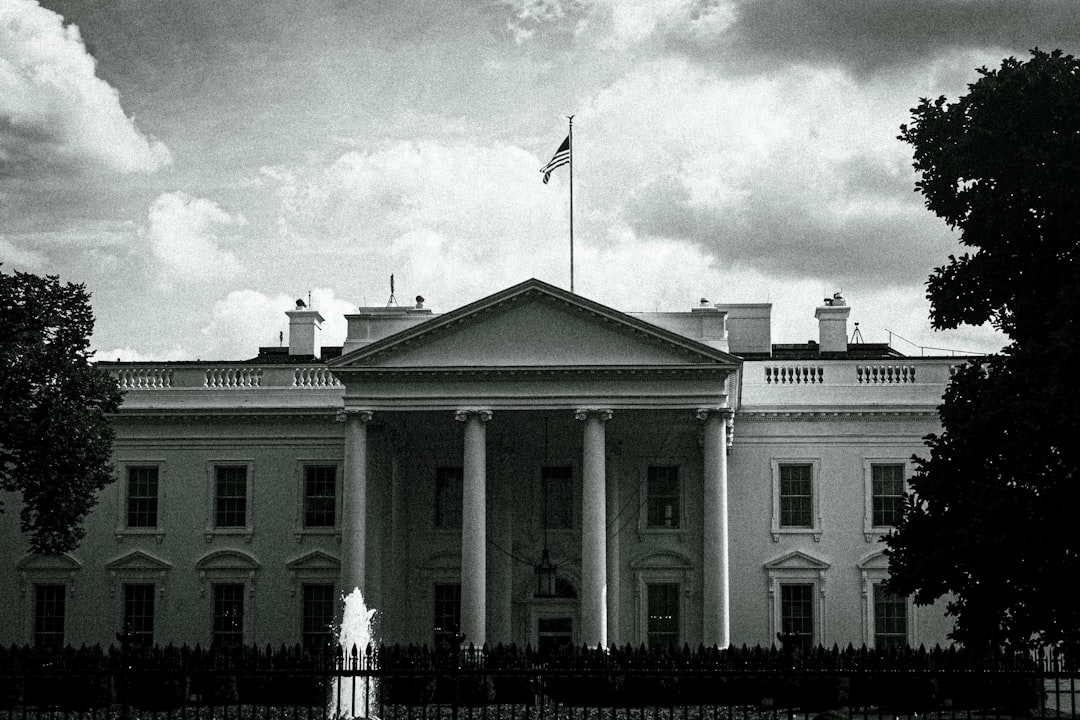
The move to the U.S., with Washington, D.C. as her base, represented more than a geographical change. It was a commitment to testing herself in an unfamiliar context, where the rhythms of work, the expectations of colleagues, and the structures of professional life would all be different from what she had known. For a journalist accustomed to one media landscape, entering another meant confronting not just new assignments but new assumptions about how work gets done.
What they tried
Ileuova's relocation required her to adapt to the realities of working in a new country, particularly the prevalence of remote work arrangements. This shift demanded something she had to consciously develop: high self-discipline. Working remotely, away from the physical structures and social accountability of a traditional office, presented a distinct challenge. There was no commute to mark the boundary between personal and professional time, no colleagues nearby to create ambient accountability, no shared physical space to anchor the workday.
She approached this challenge as something requiring deliberate cultivation rather than something that would come naturally. The flexibility of remote work, while valuable, also meant that the responsibility for maintaining focus, meeting deadlines, and sustaining productivity fell squarely on her own shoulders. This was not a problem to be solved once but an ongoing practice to be maintained.
What worked, what didn't
The discipline required for remote work proved essential, though the article does not detail specific successes or failures in her adaptation. What became clear through her experience was that working abroad fundamentally altered how she understood her profession and her place within it.
"When you work abroad, your thinking becomes more global." — Ruzana Ileuova, in an interview with The Times of Central Asia, 2026.
This shift in perspective was perhaps the most significant outcome of her relocation. By positioning herself within a different professional ecosystem, Ileuova developed a broader understanding of journalism, work culture, and her own identity as a professional. The challenges of remote work and cultural adjustment, while demanding, created the conditions for this expansion of perspective.
What they'd tell someone else
For anyone considering a similar move—leaving their home country to advance their career in a global work environment—Ileuova's experience offers a straightforward lesson: adaptability and self-discipline are not optional. They are the foundations upon which professional growth in a new context is built.
The value of working abroad extends beyond the immediate professional gains. It reshapes how you think about work itself, about your capabilities, and about the world beyond your original context. The difficulties are real—the isolation of remote work, the unfamiliarity of new professional norms, the constant small adjustments required to function in a different system. But these difficulties, when met with intentional discipline and openness, become the very mechanism through which genuine growth occurs. The perspective that emerges from this experience is not something that can be gained from a distance; it requires presence, effort, and the willingness to be uncomfortable in service of understanding.
- Moved to the U.S. to understand real work dynamics faster
- Emphasizes the need for high self-discipline when working remotely
- Believes working abroad broadens one's thinking to a global perspective