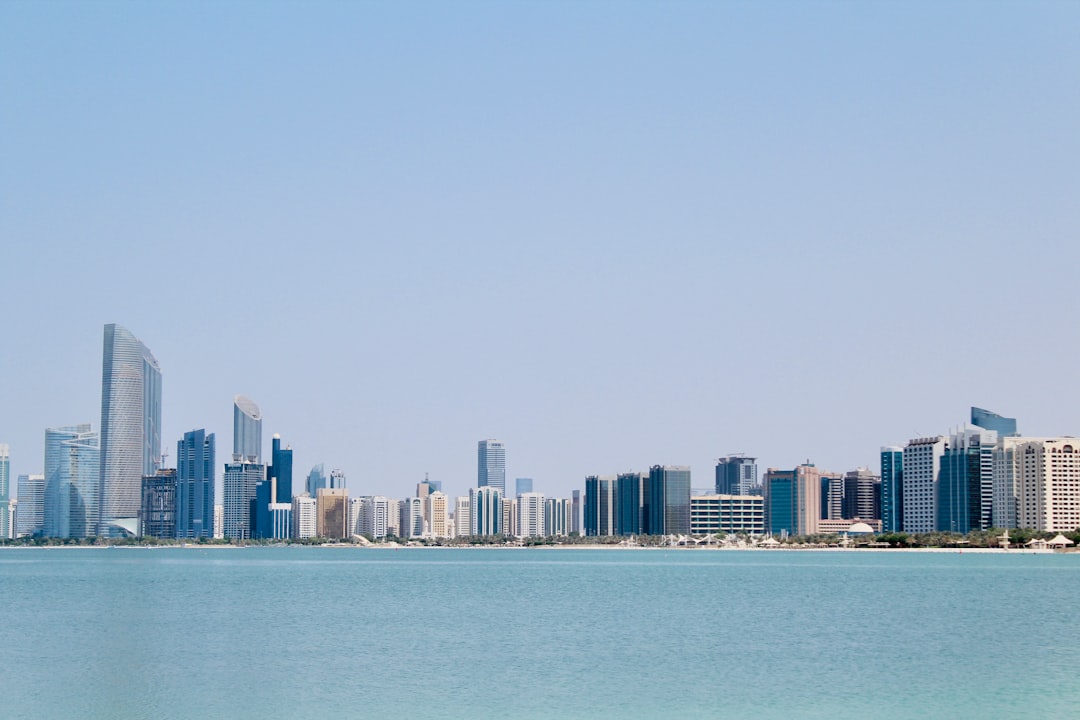
Photograph: Jens Aber / Unsplash
The situation
After fifteen years as a petroleum engineer at Saudi Aramco, Dr. Fatima Al-Rashid confronted a professional inflection point. The Kingdom of Saudi Arabia was actively diversifying its economy away from oil dependency, signalling a structural shift in the energy sector where she had built her entire career. The question was not whether change would come, but whether she would change with it.
Al-Rashid held a PhD in Petroleum Engineering from King Fahd University of Petroleum and Minerals, credentials that had served her well in the traditional energy industry. Yet as Saudi Arabia began investing in renewable capacity, she recognised that her technical foundation in energy systems—while valuable—would need to be reoriented toward solar and other clean technologies. The decision to pivot was not made lightly. Colleagues and family members questioned the move, viewing it as a departure from established expertise rather than an extension of it.
The approach
In 2018, Al-Rashid proposed an internal transition program to her management at Saudi Aramco. The proposal was rejected as impractical. Rather than accept this setback, she pursued external education independently while maintaining her petroleum engineering role, a deliberate strategy to demonstrate commitment to the transition without abandoning her existing responsibilities.
In 2019, she completed a specialised executive program in renewable energy management at Stanford University. This external credential, combined with her deep technical background in energy systems, positioned her as a hybrid professional—someone who understood both the legacy energy sector and the emerging renewable landscape. She was building credibility in a new domain while retaining the institutional knowledge of the old one.
What happened
The opportunity arrived through a new government renewable energy initiative. Al-Rashid was recruited as a technical lead for a major solar project, a role that capitalised on her dual expertise. She was tasked with leading the technical strategy for one of the Middle East's largest solar developments.
The project she led generates 500 megawatts of power and supplies electricity to over 40,000 households. Beyond the technical achievement, Al-Rashid navigated significant cultural and organisational challenges. Senior management scepticism persisted—questions about whether petroleum engineers could effectively transition to clean energy remained common. She proved through execution that oil industry expertise could be adapted to solar technology implementation.
Her team grew from twelve engineers to eighty-seven within three years. Notably, sixty per cent of her expanded team were women, an unusual composition for the energy sector in the Gulf region. This demographic shift reflected both her hiring decisions and the broader opportunity that renewable energy projects represented for women entering technical roles in Saudi Arabia.
By 2024, the project had become a model for other Gulf states seeking to develop renewable capacity. The technical and organisational success demonstrated that the transition from traditional to renewable energy was not merely possible but could be led by professionals with deep roots in the legacy sector.
"When I first proposed moving into renewables, people thought I was abandoning my expertise. I realized I wasn't leaving it behind—I was applying it to a new challenge. Understanding how energy systems work at scale, managing complex projects, and leading technical teams—these skills don't belong to oil or solar. They belong to energy itself." — Dr. Fatima Al-Rashid, in an interview with Gulf Energy Review, March 2023.
The takeaway
Al-Rashid's career transition illustrates a broader principle about professional reinvention within established industries. Career pivots in traditional sectors do not require abandoning previous expertise; they require demonstrating value across both domains. Her success stemmed from building credibility in renewable energy while leveraging her technical foundation in energy systems at scale. The institutional knowledge she had accumulated—project management, team leadership, complex technical problem-solving—proved transferable precisely because it was grounded in engineering fundamentals rather than technology-specific practices.
For professionals in legacy industries facing sectoral transformation, the path forward is not to discard prior experience but to recognise it as a bridge. Al-Rashid's trajectory from petroleum engineer to renewable energy pioneer suggests that the most effective transitions are those where old expertise becomes a foundation for new capability, rather than an obstacle to it.
- Al-Rashid held a PhD in Petroleum Engineering from King Fahd University of Petroleum and Minerals
- She completed a specialized executive program in renewable energy management at Stanford University in 2019
- The solar project she led generates 500 megawatts of power and supplies electricity to over 40,000 households
- She faced significant resistance from senior management who questioned whether oil engineers could effectively transition to clean energy
- Her team grew from 12 to 87 engineers within three years, with 60% being women—unusual for the region's energy sector