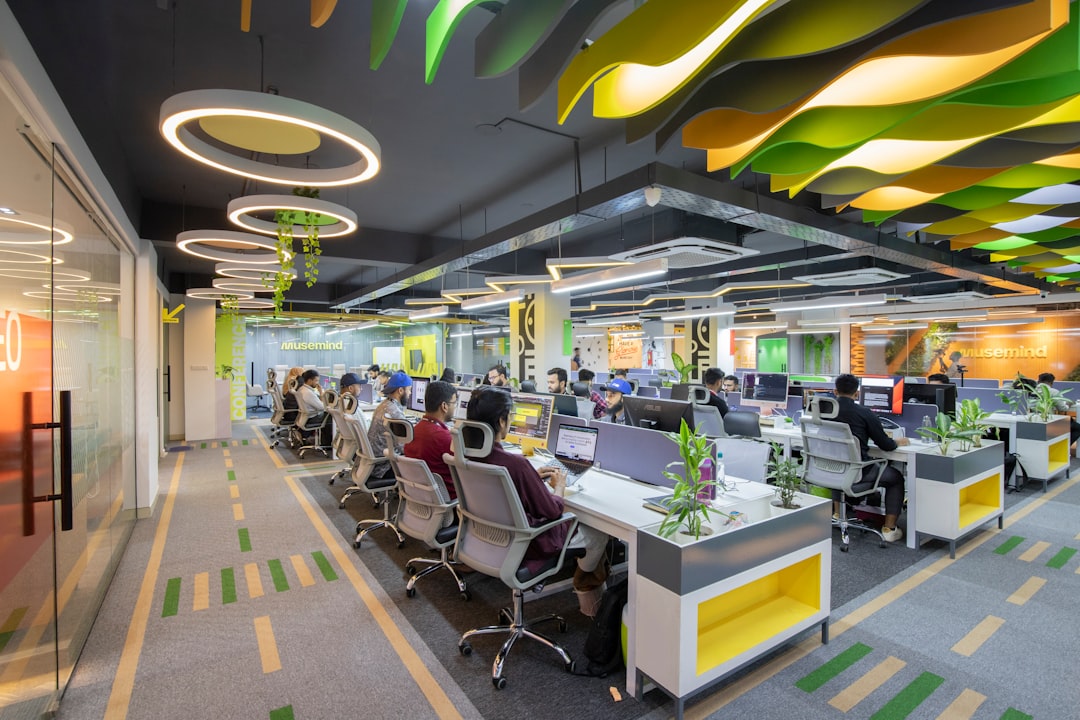
Photograph: Palak Pitroda / Unsplash
The situation
Rajesh Patel spent twelve years at HDFC Bank, advancing through the ranks of retail banking to the position of Vice President. His portfolio management responsibilities encompassed millions of rupees. His compensation reflected his seniority—a six-figure salary complemented by pension entitlements and stock options. By conventional measures of professional success, Patel had achieved what many in the Indian financial sector aspire to reach.
Yet proximity to wealth did not insulate him from witnessing poverty. Working in Mumbai, Patel observed the financial constraints of his own household staff—drivers, cleaners, and other domestic workers—who faced systematic exclusion from formal credit markets. When his driver's daughter sought a loan to start a small tailoring business, she encountered the standard barrier: no collateral, no credit history, no access. Traditional banks had no mechanism to serve her. Patel recognized that the financial system he had helped operate was structurally designed to exclude the very people who needed credit most urgently.
This recognition prompted a decision that contradicted the logic of his career trajectory. In 2015, Patel resigned from his position at HDFC Bank and committed himself to building an alternative.
The approach
Before launching Samuday Finance, Patel invested months in research and fieldwork. He conducted extensive visits to rural areas, speaking directly with low-income households about their borrowing needs and the obstacles they faced. His investigation confirmed what academic literature on microfinance had long documented: traditional collateral requirements and documentation demands created insurmountable barriers for poor borrowers who lacked formal employment records or property titles.
Patel designed a group-lending model centered on trust and community accountability rather than collateral. The structure drew conceptual inspiration from the Grameen Bank model pioneered in Bangladesh but was adapted to function within the Indian context and regulatory environment. Rather than requiring individual guarantees backed by assets, the model relied on the social cohesion of borrowing groups—typically women entrepreneurs organized through existing self-help groups—to ensure repayment through peer accountability.
Samuday Finance launched in 2016 with initial capital of ₹2.5 crores sourced from Patel's personal savings and angel investors from his professional network. Operations began in a single village with a minimal team: three loan officers and Patel himself. The organization faced skepticism from family members and former colleagues who questioned the viability of a for-profit microfinance model operating in rural areas with borrowers deemed too risky by conventional lenders.
What happened
Growth came through mechanisms that did not rely on expensive marketing. Word-of-mouth referrals from satisfied borrowers expanded the customer base. More significantly, Samuday Finance built systematic relationships with local women's self-help groups, which served as both a source of borrowers and a distribution channel. These groups provided the social infrastructure necessary for the group-lending model to function.
The organization scaled rapidly across Maharashtra and Karnataka. By 2023, Samuday Finance had provided microloans to over 45,000 women entrepreneurs across 12 districts. The average loan size ranged from ₹15,000 to ₹50,000—amounts large enough to enable meaningful business activity but small enough to match the repayment capacity of borrowers operating in informal sectors. The repayment rate reached 98.2%, significantly outperforming industry standards and validating the group-lending model's effectiveness.
Institutional validation followed operational success. The Reserve Bank of India recognized Samuday Finance as a Microfinance Institution in 2018, granting regulatory legitimacy. The organization achieved operational profitability in 2019. By 2023, the payroll had expanded to 120 staff members. Institutional funding from organizations including Acumen Fund provided capital for further expansion.
"I was making excellent money at HDFC, attending board meetings and managing billion-rupee portfolios, but I wasn't sleeping well at night. When my driver's daughter couldn't get a loan to start a small tailoring business because she had no collateral, I realized I was part of a broken system. Walking away was terrifying, but building something that actually solves problems for people who need it most has been far more rewarding than any bonus I ever received." — Rajesh Patel, Founder and CEO of Samuday Finance, in an interview with The Economic Times, March 2022.
The takeaway
Patel's trajectory challenges a narrow definition of professional achievement. The conventional narrative measures success by salary, title, and portfolio size—metrics that Patel had optimized within the banking sector. Yet these measures did not capture the structural problems in the financial system itself. Solving those problems required stepping outside the system rather than ascending within it.
The case of Samuday Finance demonstrates that significant impact often emerges not from working within existing institutions but from recognizing their limitations and building alternatives. Patel's decision to leave a secure, lucrative position was not an act of idealism disconnected from business discipline. The 98.2% repayment rate, the profitability achieved by 2019, and the institutional funding attracted by demonstrable results show that addressing overlooked market segments can be both socially valuable and financially viable. The measure of professional achievement, in this instance, was not the salary foregone but the 45,000 women entrepreneurs who gained access to capital they could not obtain elsewhere.
- Patel left a senior position as Vice President of Retail Banking at HDFC Bank in 2015 with a secure pension and stock options
- Samuday Finance launched with initial capital of ₹2.5 crores from personal savings and angel investors from his professional network
- The organization has since provided microloans to over 45,000 women entrepreneurs across 12 districts in Maharashtra and Karnataka
- Average loan size is ₹15,000 to ₹50,000 with a 98.2% repayment rate, significantly outperforming industry standards
- Samuday Finance achieved operational profitability in 2019 and expanded to employ 120 staff members by 2023